
TECHNOLOGY THAT EXPANDS INDEPENDENCE
The Maker Lab
A place to make the things that could make your day easier.
Start with a person.
Make room for an idea.
Founder Nexon Louis knows the frustration of needing an adaptation that nobody sells. Limited hand function can turn an ordinary task into a design problem. A useful answer might be small: a different grip, a switch mount or an accessible way to control software.
The Maker Lab would bring people, tools and skilled support together. Advanced technology includes accessible input devices, digital design, electronics, 3D printing, robotics and AI where useful. The goal is a task someone wants to do, not a demonstration of a particular product.
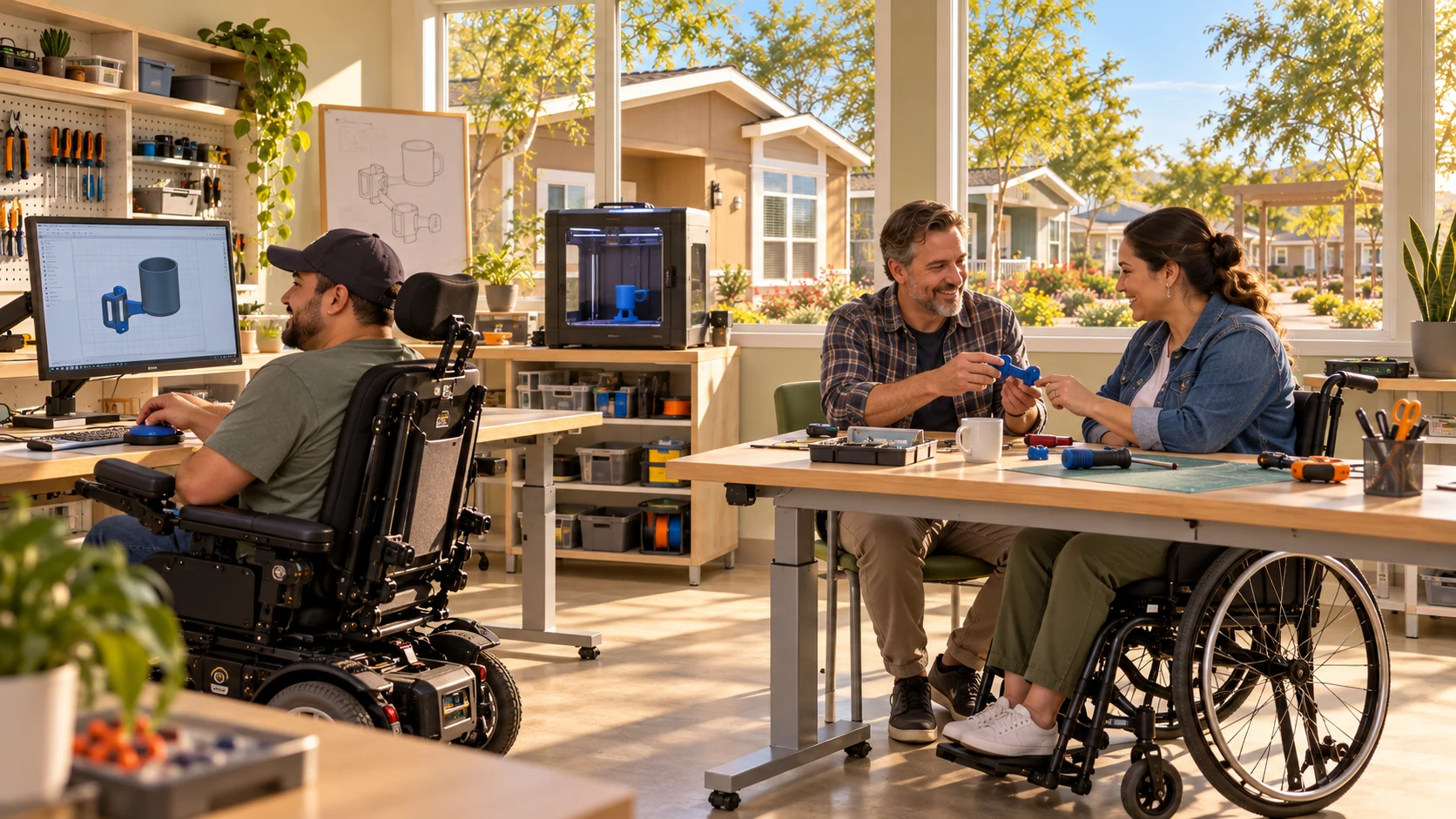
A future neighborhood could give this work a lasting home. The first useful results need not wait for construction.
A modest beginning.
A useful test.
Proposed scope: recruit six consenting participants, each choosing one daily task. Plan 8–12 weeks of supported design and trials, followed by 30- and 90-day follow-up. Use established open designs where appropriate.
- Choose: understand the task, the current workaround and what the participant wants to change.
- Make and try: work with a maker lead and appropriate accessibility or occupational-therapy input. Adjust the design through supported trials.
- Keep what helps: record usefulness, continued use, setup, repair needs and full costs. Share designs or stories only with permission.
These are targets for work to attempt, not a promise of six successful devices or clinical improvement. A host, delivery team, access arrangements, insurance and quotations must be established before launch. The location remains to be agreed; it need not be the future Arizona housing site.
Participation is voluntary. A person’s housing, essential assistance or access to services would not depend on joining an experiment or appearing in publicity. Safety-critical adaptations need qualified review; experimental equipment does not replace care.
A proposed $20,000 first phase.
This is the existing Maker Lab allocation within the $150,000 feasibility plan, not an additional $20,000 on top of it. The planning budget below assumes contributed accessible host space; it is not a quote for a permanent lab.
| Work supported | Proposed amount |
|---|---|
| Maker lead, coordination and follow-up | $6,500 |
| Access / occupational-therapy design consultation | $2,500 |
| Participant compensation, transport and accommodations | $3,000 |
| Equipment, adapted inputs and workstations | $3,000 |
| Materials, iteration and replacement parts | $1,500 |
| Allocated insurance, host / fiscal administration | $1,500 |
| Contingency | $2,000 |
| Total proposed cash budget | $20,000 |
Equipment gifts would be scoped separately from cash needs. Skilled time, supervision, access, consumables and repairs are essential parts of the work.
Show what changed.
Be honest about what didn’t.
A future pilot report should account for spending and participant-defined results: the original task, design iterations, usefulness, continued use, costs, breakage and repair. Failures and changes belong in that account too.
With permission, a practical design or a short demonstration can help someone elsewhere. Publicity is a separate choice, not an obligation or a guaranteed sponsor benefit.
The approach draws inspiration from Makers Making Change, ATMakers and AzTAP. These are examples, not Future Reach partners.
Bring one useful piece.
- A host: accessible space, suitable equipment arrangements and an accountable delivery partner.
- People: an experienced maker lead, access expertise, participant input and technical collaborators.
- Tools with support: accessible workstations, equipment, materials, training and repairs.
- Founding support: a conversation about underwriting a defined part of the pilot once a receiving arrangement is ready.